
The College Partner Collection is a peer reviewed space on Educate for materials produced by individuals or organizations outside the institution, such as alumni, former faculty, and organizations or groups who may be already working in partnership with Bank Street.
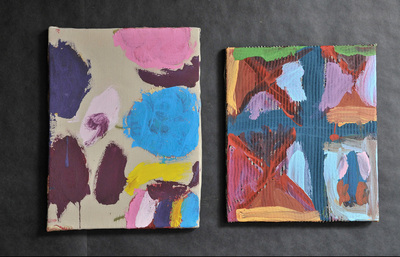
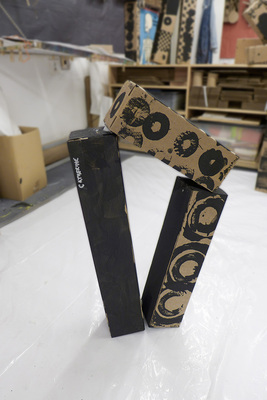
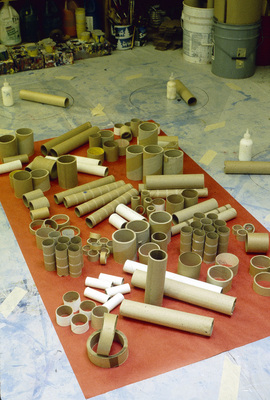
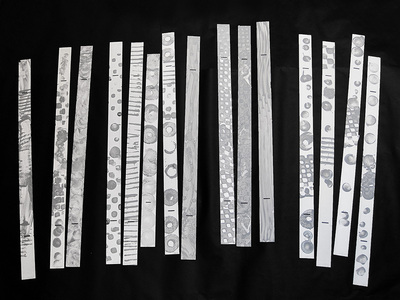
-
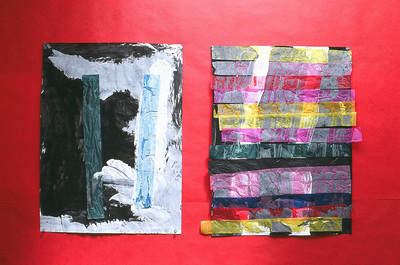
Black and White Painting with Colored Tissue Paper
Barry Goldberg
Combining materials that have very different properties can heighten a child’s sensitivity to those properties and to the possibilities they offer. In this project, instead of the usual cups of paint containing red, yellow, blue, and white, the children are given only black and white paint.
-
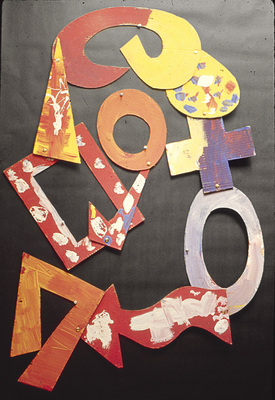
The Attached Shapes Project
Barry Goldberg
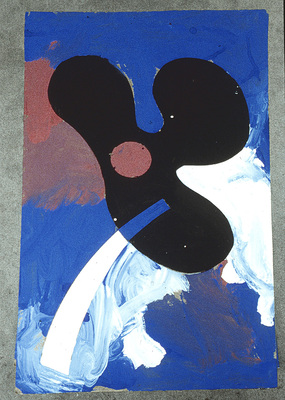
Because this project ‘grows’ in a linear manner (one thing added to another), it often provides striking insight into how a child’s visual ideas unfold as they work.
-
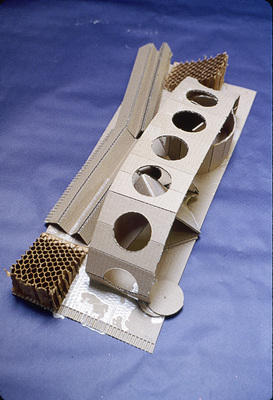
The Cardboard Construction Project
Barry Goldberg
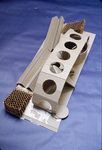
A limitation, restriction, or constraint can force us to consider previously unimagined possibilities. In the Cardboard Construction Project, the restriction is a material one. In preparing the materials for this project, I take cardboard and cut or score* it in as many ways as I can think of.
What will quickly become apparent is the surprising variety of forms that can be generated by altering a single material.
-
The Cut Up Painting Project
Barry Goldberg
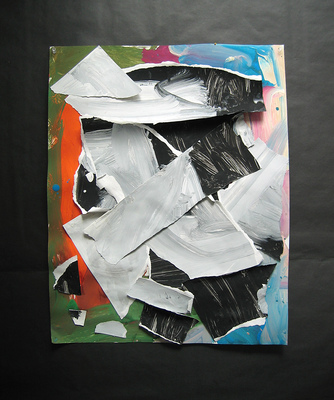
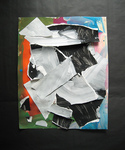
With some projects, it is the mischievous allure of a suggested action that draws children in. The Cut-up Painting Project uses this idea to open the door onto a valuable experience: take something which you thought of as whole, complete, finished, then literally cut it to pieces, and then reassemble it to discover a completely new set of possibilities.
-
The Divided Box Project
Barry Goldberg
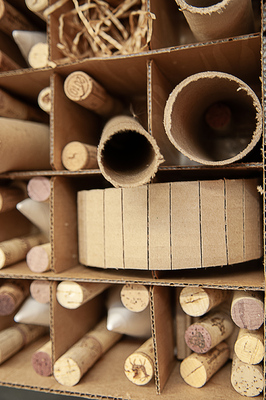
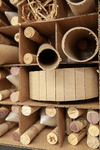
For this project I use a broad variety of cardboard materials, along with some wood and paper materials, but I avoid materials with other color. The reason for doing this is to bring more attention to the different textures of the materials that are available.
-
The Entwined Shape Project
Barry Goldberg
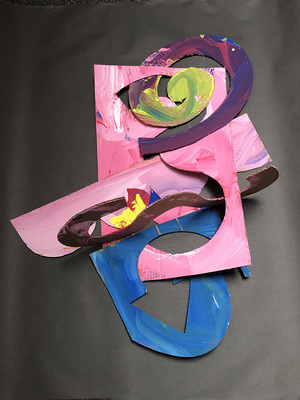
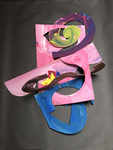
This project is excellent for making children aware of the shape of the space between painted forms. It also provides an opportunity to point out how the shape of these spaces relates to the cardboard shapes they have painted.
The Entwined Shape project functions as a compliment to the Attached Shapes Project.
-
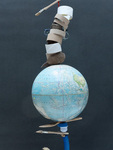
The Hanging Sculpture Project
Barry Goldberg
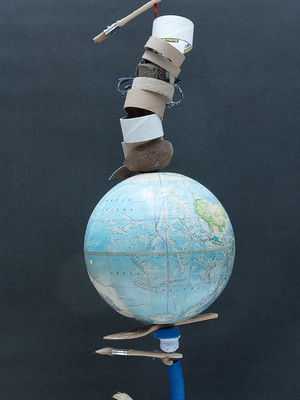
The combining of disparate materials and distinct visual rhythms give these hanging sculptures an improvisational character and a jazz-like musicality.
-
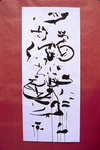
The Ink Drawing Project
Barry Goldberg
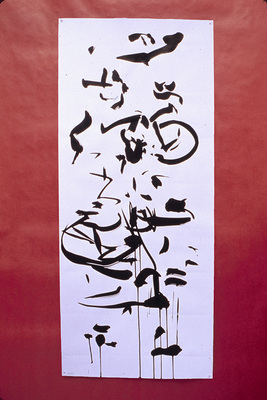
In this project, the children have before them a piece of paper 42” high that is pinned to the wall. A child is given a length of bamboo about as long as they are tall, to which a brush has been inserted. Because the handle of the brush is so long, even a small movement of a child’s hand can create a startlingly long mark on their large paper. This is a thrilling experience for a child, and it offers the opportunity to create a very different vocabulary of marks than they could with a small brush.
-
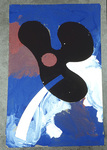
The Puzzle Painting Project
Barry Goldberg
In this project, each child is given a single sheet of cardboard that has been cut to form a useable puzzle. These puzzles can be as simple or as complex as suits the age of the child. Older children may be able to draw the shapes they want. A teacher can then use a mat-knife to cut the shapes out.
-
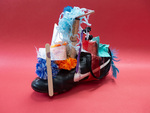
The Shoe Project
Barry Goldberg
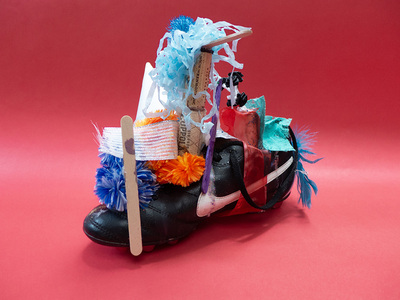
Taking an object that is generally associated with a single common purpose and using it for an entirely different purpose is more than just a mischievous, aesthetic diversion—it is a deeply liberating act with considerable implications. It demonstrates an ability to see past the conventions and mental habits that usually limit our thinking. It is an ability that goes to the very heart of invention—not just aesthetic invention, but creative thinking itself.
-
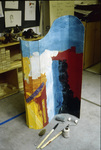
The Standing Screen Project
Barry Goldberg
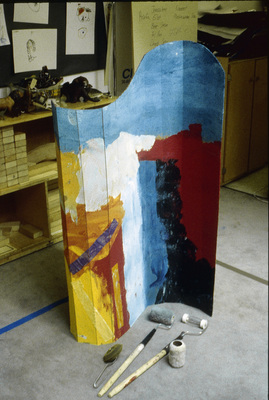
In this project, children use rollers rather than brushes to paint on “scored’’ cardboard shapes. “Scored” is a term which means essentially to cut lightly. With cardboard, it means to cut the face-paper of just one side of the cardboard and not cut all the way through the material. A scored piece of cardboard folds very easily along the scored lines.
-
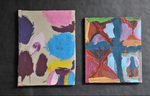
The Stretched Fabric Painting Project
Barry Goldberg
One of the first things children will experience is that it feels completely different to paint on fabric stretched over a frame, rather than on a piece of paper lying on a hard floor. The fabric has give to it, and texture. Most significantly, I use patterned fabrics, which is to say, before a child has even made a mark, there is something for them to consider and respond to. The heart of this project lies in the dialogue between the pattern the child encounters and the marks the child makes.
-
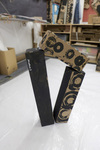
The Tall Box Sculpture Project
Barry Goldberg
A free-standing sculpture offers a completely different experience than what was true of projects which end up affixed to a wall. There is now the opportunity to create an object that occupies the same space the child’s own body occupies.
-
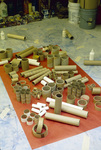
The Tube Construction Project
Barry Goldberg
There is much learning by doing in this project. Children test out ideas and continuously adjust their thinking as they gain more knowledge about the material they are using. The sculpture is the material evidence of that back-and-forth process of evolving thought.
-
The Venetian Blind Sculpture Project
Barry Goldberg
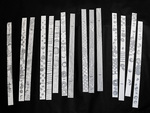
The slats from venetian blinds are quite stiff. When combined with cardboard tubes and glue, they allowed for new, and at times remarkable, solutions to the question of how one slat might be joined to another.
-
The Vertical Blind Project
Barry Goldberg
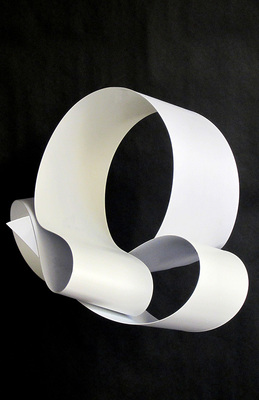
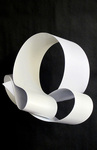
This project began with a parent donating the very flexible white slats from their vertical window blinds. In the first part of this project, the children were simply given one of the slats to physically experiment with: to explore what was possible with this new, flat, white, flexible material. In addition to getting a feel for its surface texture, weight and floppiness, they explored its capacity to bend and twist. The engagement with their bodies inspired unexpectedly inventive aspects of dance and performance. After a time, we asked them to think about the blind as a material for a sculpture and to bend it into one shape that they wanted to keep.
-
Tools, Mats, and Methods for Cutting Materials
Barry Goldberg
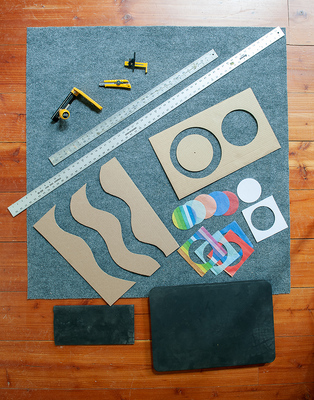
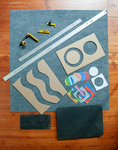
The material that has been essential to many projects is cardboard. Lightweight, sturdy, inexpensive and easy to shape, cardboard is a remarkably versatile material. It can also be seen as difficult to cut. With the right tools and cutting surface, this need not be the case.
-
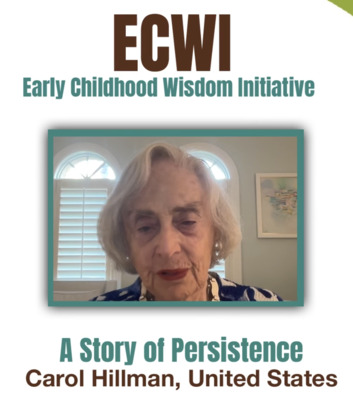
A story of persistence
Carol Hillman
A Bank Street College graduate shares her long journey, with many obstacles along the way, to realizing her ever-expanding professional goals.
-
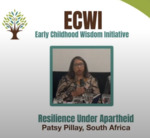
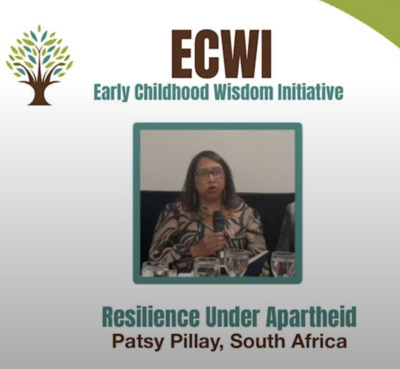
Resilience Under Apartheid
Patsy Pillay
A South African early childhood professional describes what it was like growing up in South Africa in the Apartheid era.
-
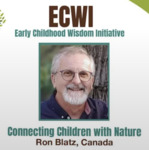
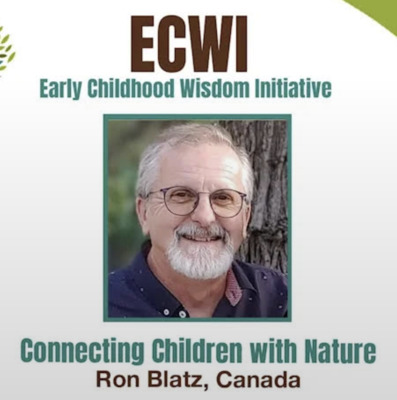
Connecting Children with Nature
Ron Blatz
A Canadian early childhood professional describes what motivated him to make being in nature a key component of his early childhood center.
-
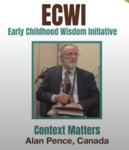
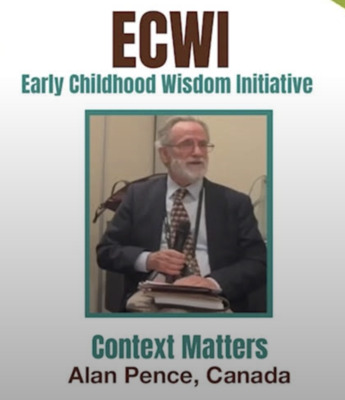
Context Matters
Alan Pence
A Canadian early childhood professional discusses the impact of having nearly all child development research and literature coming out of western nations representing less than 5% of the world's population.