Abstract
The Black American community has always understood the power of literacy and education, and the importance of Black self-sufficiency to attain these. The establishment of Freedom Schools during the 1964 Freedom Summer in Mississippi is an actualization of that understanding. Since 1995, the Children’s Defense Fund (CDF) has carried on the work and legacy, with Freedom Schools still taking place all over the United States. For two summers, we, researchers from the University of Virginia, have had the opportunity to partner with a CDF Freedom School as part of a mixed-method research study. This essay serves as a reflection and discussion of our experiences within the Freedom School site and the ways the work of the school is connected to the original Freedom School’s mission as well as longstanding Black education traditions.
Author Biography
Trayc D. Freeman
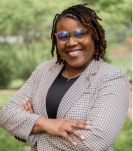
Trayc D. Freeman, PhD, is a recent graduate from the social foundations doctoral program at the University of Virginia. Her research centers oral histories and the lived experiences of Black communities and their schools, while examining the historical occurrences, policies, and procedures that have affected Black education and its stakeholders before, during, and after desegregation. Prior to this, Trayc received her bachelor’s degree in African American studies and her master’s in social foundations from the University of Virginia. She has also held multiple positions across the higher education field in areas including office administration, library services and event planning, and Black student scholarship and alumni engagement.
Wintre Foxworth Johnson

Wintre Foxworth Johnson is an assistant professor at the University of Virginia’s School of Education and Human Development. Johnson’s research investigates African American children’s literacies, racial awareness, and sociopolitical knowledge as well as the nature and impact of centering Black intellectual production and histories in early education. Her work has been published in Reading Research Quarterly, Journal of Early Childhood Literacy, Contemporary Issues in Early Childhood, Journal of Negro Education, and Urban Education. Her research has been funded by the Spencer Foundation and the Institute for Education Sciences. She is a 2026 National Academy of Education (NAEd)/Spencer Postdoctoral Fellow.
Tiffany D. Meadows
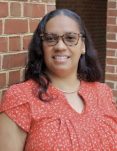
Tiffany D. Meadows is an educator and PhD candidate in Curriculum and Instruction at the University of Virginia. Her work bridges teaching, research, and community engagement. Her research centers Afro-Bahamian adolescent girls and the multiple literacies they employ to interpret, critique, and construct representations of Black girl/womanhood. Grounded in Black feminist, Caribbean feminist, and decolonial perspectives, Meadows employs ethnographic, qualitative methodologies to examine relationships among literacy, identity, culture, and representation in postcolonial Caribbean contexts. In particular, Meadows is committed to amplifying Afro-Bahamian adolescent girls’ voices and advancing culturally sustaining literacy practices that affirm their ways of knowing, being, and becoming.
Christine Onyinyechi-Uju Emuka,

Christine Onyinyechi-Uju Emuka, MA, is a PhD candidate in the Educational Psychology-Applied Developmental Science Program and a four-year Institute of Education Sciences fellow. She focuses on issues that surround radical social change, equity, and justice. Her research interests broadly center ethnic-racial identity development among Black youth across the diaspora, racial-cultural school safety, and understanding how oppressive school systems create inequalities at individual and structural levels. Moreover, she uses community engaged/applied methods to examine developmental and psychological approaches to support students in confronting these conditions as well as promotive factors within institutions to disrupt racialized systems across various school contexts.
Naila A. Smith
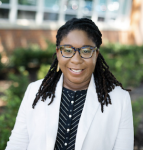
Naila A. Smith, PhD, is an assistant professor in the School of Education and Human Development at the University of Virginia. Her research focuses on the role of context (e.g., schools) and identity in the development of Black and immigrant children and youth. Dr. Smith has published in leading journals such as Child Development, Educational Researcher, and the Journal for Research on Adolescence. Her work has been supported by the Spencer Foundation and the American Association of University Women. She is also a steering committee member of the Society for Research in Child Development Black Caucus.
Recommended Citation
Freeman, T. D.,
Johnson, W. F.,
Meadows, T. D.,
Emuka, C. O.,
&
Smith, N. A.
(2026).
Freedom is taught here: Freedom schools and the radical tradition of intergenerational community learning in black education.
Occasional Paper Series,
(56), 28-38.
DOI: https://doi.org/10.58295/2375-3668.1613
Included in
African American Studies Commons, Black History Commons, Curriculum and Social Inquiry Commons, Language and Literacy Education Commons, Social Justice Commons