Abstract
This article reconceptualizes the Atrato River as a living pedagogical archive that participates in the formation of Black education in Chocó, Colombia. Drawing on Black feminist oral methods, it centers a dialogue among Black educators to examine how educational knowledge emerges through relationships with the river, territory, memory, and community life. The analysis argues that river-based pedagogies distinct Afro-Colombian epistemologies that challenge White/Mestizo-centered and standardized models of schooling. Storytelling, river travel, intergenerational memory, and everyday territorial practices are examined as pedagogical processes through which Black communities sustain identity, historical consciousness, and collective sovereignty. The article further contends that the Atrato's legal recognition as a subject of rights has not displaced the colonial logics that continue to shape curriculum and Black educators’ practices. By positioning the river as a thinking partner and living archive, the article contributes to scholarship on Black education, decolonial pedagogy, Black feminist thought, and territorial education, and argues for water-centered, territory-rooted approaches to educational research and practice.
Author Biography
Siris Sulay Mena-Rivera
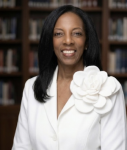
Siris Sulay Mena-Rivera is a full-time professor and researcher in the Modern Languages Program, with an emphasis on English, at Universidad Tecnológica del Chocó Diego Luis Córdoba, Colombia. She holds a BA in Modern Languages and an MA in Teaching from Universidad de La Salle and is currently a doctoral candidate in Education and Social Communication at Universidad de las Américas y el Caribe. A former Fulbright Teacher Exchange grantee, she led Colombia’s first Intercultural and Multilingual Education Policy in Quibdó and directs the Model United Nations program (MONUTCH). Her research examines interculturality, community cohesion, decoloniality, and global citizenship.
Karen Chaverra-Mosquera
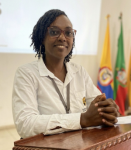
Karen Chaverra-Mosquera is general coordinator of the Center for Languages and Cultures at Fundación Universitaria Claretiana, Quibdó, Colombia. She holds a degree in Modern Languages and a master’s degree in the Design and Management of Virtual Learning Environments. Her academic and professional work focuses on critical and decolonial education, feminist and intergenerational pedagogies, and knowledge production within Afro-descendant communities, particularly among Black youth. Drawing on participatory research and educational activism, her scholarship explores transformative pedagogies rooted in community knowledge, social justice, and territorial change.
Maure-Aguirre-Ortega
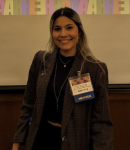
Maure-Aguirre-Ortega is a Fulbright doctoral student in the department of Curriculum and Instruction and in the department of Women, Gender, and Sexuality Studies at Penn State University. Inspired by decolonial, Black, and Latinx feminist thought on language education, her research interests consider the exploration of multiple intersectional coalition building opportunities, pedagogies, teaching practices, and the role of speculative and community-based research in addressing systems of oppression that impact minoritized students. Her current research project explores how intergenerational coalitions among women can disrupt power structures and the coloniality of language to envision education as a practice of freedom.
Recommended Citation
Mena-Rivera, S. S.,
Chaverra-Mosquera, K.,
&
Aguirre Ortega, M.
(2026).
Voices from the Atrato: Reclaiming AfroColombian Education from the Riverbank.
Occasional Paper Series,
(56), 96-106.
DOI: https://doi.org/10.58295/2375-3668.1617
Included in
Curriculum and Instruction Commons, Curriculum and Social Inquiry Commons, Educational Assessment, Evaluation, and Research Commons